
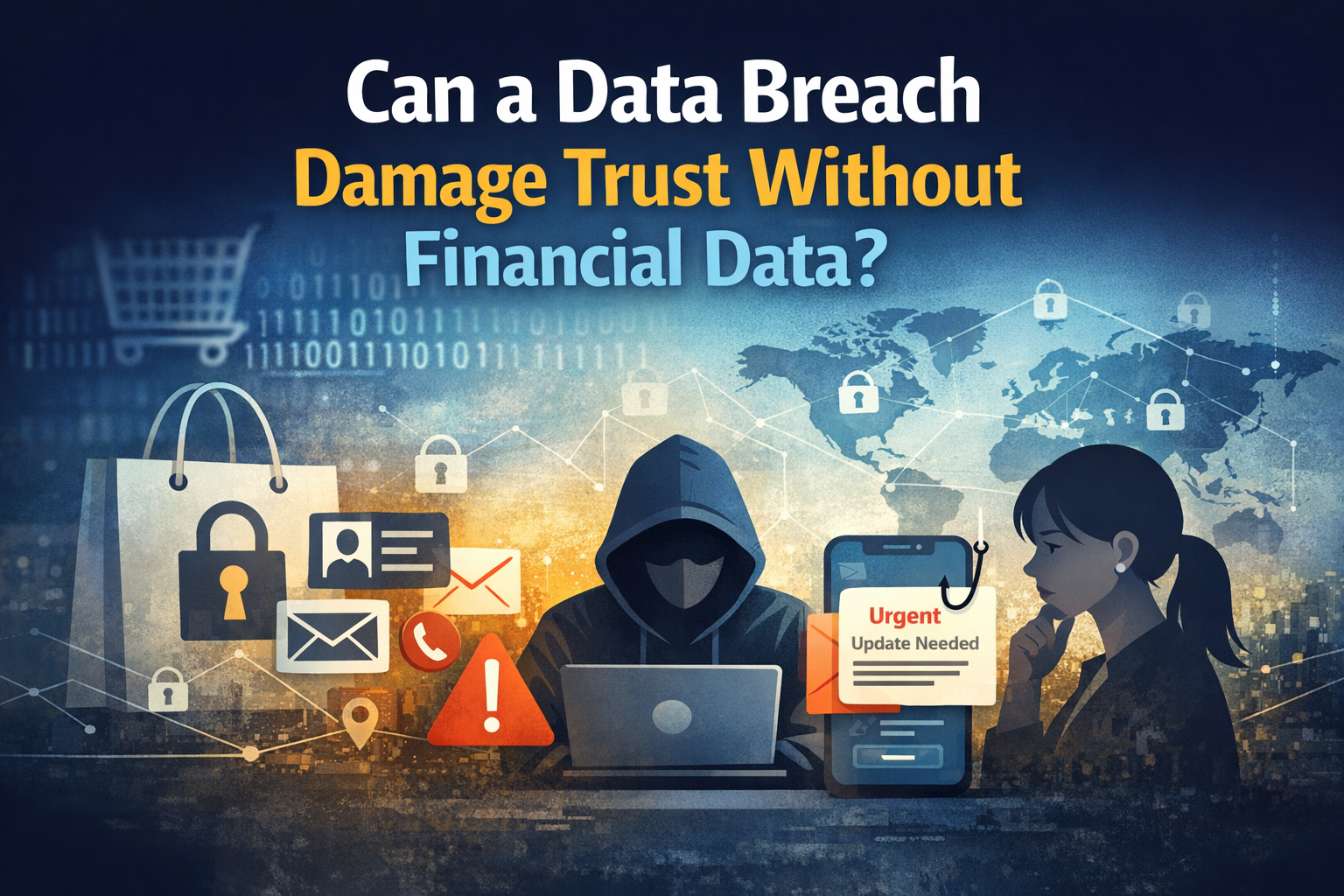
When people hear the term data breach, the first question is usually: “Were payment details stolen?”
But as a recent incident involving fashion retailer Zara shows, the answer doesn’t always need to be “yes” for there to be real risk.
What Happened?
Zara recently confirmed that a data breach exposed information belonging to around 197,000 customers. The breach was linked to a third-party customer service platform, rather than Zara’s core systems.
The information involved included:
- Names
- Email addresses
- Phone numbers
- Shipping details
Importantly, Zara has stated there’s no evidence that payment card details or passwords were compromised.
So… no financial data. No passwords. Sounds less serious, right?
Not quite.
Why This Still Matters
Even without financial information, this type of data is extremely valuable to attackers.
Think about it from a cybercriminal’s perspective. They now potentially have:
- Real customer names
- Verified email addresses
- Accurate contact details
- Purchase or delivery context
That’s everything needed to create convincing, highly targeted phishing emails or messages.
For example:
“Hi John, we noticed an issue with your recent Zara order. Please click here to update your delivery details…”
Because the message feels personalised and comes from a trusted brand, people are far more likely to click.
And that’s where the real danger lies.
The Growing Risk of Third-Party Platforms
One of the most important takeaways from this breach isn’t just the data itself—it’s where the breach originated.
It didn’t happen directly inside Zara’s systems.
It came through a third-party provider.
This is becoming increasingly common.
Modern businesses rely on a wide range of external platforms for:
- Customer service
- Marketing automation
- Analytics
- Payment processing
- Support systems
Each one of these integrations adds convenience… but also adds risk.
In simple terms, every connection is another potential entry point.
Why Trust Is Still on the Line
Even if no bank details are exposed, incidents like this can still damage customer trust.
From a customer’s point of view:
- Their personal information has been exposed
- The breach is linked to a brand they trust
- They may now become targets for scams
That erosion of trust can be just as damaging as financial loss—sometimes more so.
What Businesses Should Really Be Thinking About
This type of incident highlights a shift in how organisations need to think about security.
It’s no longer just about protecting your own systems.
It’s about understanding:
- Who has access to your data
- Where that data is stored and processed
- How secure your third-party providers really are
In other words, your security posture is only as strong as your weakest link—and that link is often outside your direct control.
The Bigger Picture
At Lithium Systems, this is something we’re seeing more and more with clients.
Traditional security controls (firewalls, antivirus, patching) are still critical—but they’re no longer enough on their own.
There’s an increasing need to focus on:
- Vendor risk management
- Data access visibility
- Third-party security reviews
- Clear accountability for data handling
Because attackers are adapting—and they’re actively looking for the easiest way in.
The Takeaway
You don’t need financial data for a breach to cause real damage.
Personal information like names, emails, and contact details is often more than enough to fuel targeted scams and long-term risk.
The key question for business leaders is:
How much of your customer data is currently accessible through third-party platforms?
Because for many organisations, that’s where the real exposure now sits.
At Lithium Systems, we help businesses:
- Identify where sensitive data is stored and shared
- Review third-party risks and vendor access
- Highlight gaps before attackers do
- Put practical controls in place to reduce exposure
Speak to us to book a security review and get a clear picture of your current risk position—plus straightforward, actionable steps to improve it.